Showing posts with label Modern. Show all posts

Thursday, March 21, 2013

Émilie du Châtelet


Summary

Gabrielle Émilie le Tonnelier de Bretuil du Châtelet-Lomont (1706-1749) was born into an aristocratic family (her father served in the court of the king) and as such, she received an excellent childhood education. By age 12, she had already fluently reading, speaking and writing in French, English, Italian, Spanish and German and could translate from both Greek and Latin. Nevertheless, as most women of the time, she was excluded from receiving any form of upper-level education. The Sorbonne and the “cafes” were primary sources of upper-level education but women were not permitted in such places. But Émilie was determined. She once entered a café with a friend, Maupertuis, and proceeded to join in the conversation the males at the table until she was firmly instructed to leave by café management. The following day she returned, dressed in “drag” and was permitted to remain at the table (even though it was clear she was a woman).

Voltaire
At the age of 19, Émilie married a military leader, the Marquis Floret-Claude du Châtelet-Lomont. The biography speaks little of her marriage to her husband except that she bore him three children (one who died in infancy) and had numerous affairs with various tutors and influential male members of society – each who played an influential role in her education and shaping her influence in philosophy. Likely the most influential lover in Émilie’s life was Voltaire. She and Voltaire moved into one of her husband’s abandoned estates and remodeled it into a high-class, top-notch library and laboratory in which the two studied Newton, Locke, Leibnitz, and many others. Émilie is known as an experimental physicist, replicating many of Newton’s experiments as well as conducting her own. She also dabbled in areas of ethics, philosophy of religion, philosophy of language, philosophy of science, metaphysics, wrote a number of books and essays, including her translation of Newton’s Principia and a notable essay on the nature of fire. She also collaborated extensively with Voltaire on many of their works to the extent that it is unclear which ideas belong to which author in many of their joint works.

Émilie gained wide recognition first as an experimental physicist and philosophers of science in her contribution to Voltaire’s work, Éléments de la Philosophie du Neuton, earning her the name “Lady Newton,” but also gained a great reputation as a metaphysician in her essays on optics, color, and fire, but more so from her Institutions de Physique and her translation and commentary on Principes Mathématiques de la Philosophie Naturelle (the first French translation and commentary on Newton’s Principia). Émilie initially considered herself a pure Newtonian, convinced that Newton’s works were an accurate depiction of what was actually happening in the universe. While she was convinced the Newton gave and accurate depiction of how the universe worked, she felt he failed to explain why it worked as such – Descartes held a better theory of metaphysics. She felt that Newton’s physics described an omnipotent, but not omniscient God and it claimed that action was predetermined. Predetermined action would indicate that there could be no free human action and no free will. If there is no free will, there is no virtue and vice and, according to her familiarity with Mandeville’s account of virtue and vice, she believed that without vice there is no need for political society and also no need for the spiritual reformations taking place that accounted for personal salvation, etc.

Émilie felt that without providing the metaphysical underpinnings for Newton’s physics, French society would never accept Newton and all he had to contribute. She was shortly after introduced to the works of Leibniz and she began to see how Leibniz metaphysics could support Newton. Her Institutions de Physique explains and defends the relationship between Newtonian physics and Leibnizian metaphysics. She combined Leibnizian ontology with Newtonian atomism, using Leibniz monadology to understand true substances. She discussed the principle of sufficient reason to explain why possible events actually occur and to reestablish the predictability of science (such that it is not merely a whim in the mind of God that can change when God changes his mind, etc.). She also used Leibniz Law of Noncontradiction to explain how humans can still have free will and his principle of sufficient reason to explain why there are beings with free will. As such, she was seemingly able to defend Newtonianism while simultaneously preserving notions of the nature and will of God, as well as the nature and will of humans and their interaction with God. She preserved human initiative and free will as opposed to accepting humans as just cogs in the wheel of a perfectly designed machine (as Newton held).

While the Institutions was one of her greatest works, many pure Newtonians rejected the combination of Newtonian and Leibnizian ideas (Voltaire himself didn’t see a need for a metaphysical defense). Nevertheless, Émelie’s greatest work, her life’s work, was her translation of Newton’s Principia. She desired to make Newton’s views accessible to the French people. As such, she not only translated his work, but made some modifications of her own as well as added commentary. But her translation held true to Newton’s original work and she clearly indicated when she was inserting her own thoughts or corrections. For nearly two centuries, Émilie’s translation served as the primary French translation of this work and served as a central piece to the Enlightenment. While working on the translation, Émilie became pregnant by a younger lover. Fearing that she would die in childbirth, worked 20 hours a day to complete the work. She finished, but shortly after her child was born, both died.

In conclusion, while society still held up barriers to women receiving equal education with men of their same rank, Émilie’s determination allowed her to have exclusive access to private societies and the great thinkers of her day. Her aristocratic background gave her some influence, as well as her many affairs, but she was able to hire tutors from the Sorbonne to learn mathematics and physics, and was privy to an exquisite library and laboratory. She became well-known, even outside of France (Kant recognized her work and commented on an essay she had written). In addition, she was an influential thinker in various areas of science including the scientific method, metaphysics, and explored questions of theology, existence and more.


Personal Response

From this biography of Émilie, it is amazing how much she was able to learn and accomplish. She seemed nearly brilliant in her ability to learn so quickly the ideas of others, different languages and different subjects, and then to publish so many books and essays. I also found it amazing how she was so influential in science, an area that we consider to be primarily relegated to men. Of course, this was the age of the Enlightenment and science was the primary field of interest. Nevertheless, I thought it was really fascinating that she was able to gain recognition and respect for her work, despite the fact that women were still predominantly excluded from society. And this was not the type of “awe” given to women of the medieval period who were seen as prodigies, she gained legitimate respect and was sought after for conversation and ideas on the works she published and studied.

Additionally, although Émilie was a bit promiscuous, I wonder how much of that was her own desire, and how much was influenced by her understanding that sex was a means to attain a better education and access to scientific, philosophic society. A commentary from another woman suggested that she intentionally dressed in gaudy attire to make her face appealing and gain attention – which could mean she simply desired to have many lovers, or she was trying to gain favor from those she thought could offer educational benefit (so either way). Regardless, it was interesting to me that she was never criticized or rebuked for her sexuality, but maintained a seemingly respected reputation – which I think can shed light on the changing (diminishing) role of Christianity and religious values, as well as speak to her confidence and determination to do as she desired to do and accomplish her goals.

Source

Chapter 8 "Gabrielle Émilie le Tonnelier de Bretuil du Châtelet-Lomont" in A History of Women Philosophers: Modern Women Philosophers, 1600-1900, by Mary Ellen Waithe


Antoinette Brown Blackwell


Summary


Antoinette Blackwell (1825-1921) was an American philosopher, but was also the first woman minister to be ordained in America. Blackwell wrote six philosophical works and preached into her nineties. She was also known for being a social activist for Women's rights, the Temperance movement, and Abolition movement. Blackwell's most influential work was The Philosophy of Individuality (1893). Due to her progressive work towards women's rights and her longevity, Blackwell was able to cast a vote in the Presidential election in 1920.

Blackwell was educated at the Oberlin Theology Program, but the school refused to grant her a ministerial license. She then found the Orthodox Congregationalist Church, which ordained her in 1852. It was after this time that Blackwell began advocating for women's rights, specifically for women to have the right to have paid work outside the home and also for women to have the right to publically speak. After marrying and having seven children, two of them dying at birth, Blackwell found herself spending much more time at home and having less time to spend preach. It was in her time spent at home that Blackwell began to focus more on philosophy.

After a nervous breakdown, Blackwell left the parish. This is when she began to work extensively on metaphysics. Her first philosophical work was Studies in General Science (1875), which explained mind and matter in a God created universe. Her second work was The Philosophy of Individuality, which concentrated on harmony between the particular and the absolute. As time passed, Blackwell returned to preaching, having changed to the Unitarian Church and still publishing philosophic works. Blackwell died in 1921 peacefully in her sleep.

Blackwell believed that understanding metaphysics was the most important aspect to studying philosophy and thought that logic was going to undermine the philosophical system. Her purpose in studying metaphysics was to connect the study of nature with the process of the universe. Blackwell also believed that truth was not "abstract or complicated, but simple and self-evident." (pg. 190) Also, Blackwell focused on perception and thought that perceptions and observations were truths; that 'falsehoods' were merely misunderstandings of observation or not fully understanding connections. Through her education in theology and philosophy, her beliefs were constructed around the idea that God was a Rational Designer. Similarly, that all living things were conscious, including plants and animals. Blackwell strongly believed in immortality and that it should not only be grounded in a belief in God, but also in scientific justifications. She thought that "as nature endured surface changes while in its basic underlying structure, the atom, did not change, so human beings grow and develop while the self remains immortal." (pg. 192) Aligning with her fight for women's suffrage, she believed that sexes were equal, but that for every 'advance' in a male trait, there was also an 'advance' in female traits.


Personal Response

Antoinette Blackwell has been the most interesting woman philosopher who I have read about thus far. It is astonishing that she was the first woman preacher in America. I also find it inspiring that she spent her entire life working for the women’s suffrage movement and at the age of 96 was able to vote in a Presidential election.  Having published six philosophical works on various subjects, being a preacher, a mother of five, and working well into her nineties is nothing short of amazing. To me it seems that Blackwell somewhat paved the road for the women philosophers who would soon follow her. Having made profound contributions to philosophy it is a little unsettling that her name has not come up in my education so far.

Source

Chapter ? "..." by? in  A History of Women Philosophers: Modern Women Philosophers, 1600-1900 by Mary Ellen Waithe

Wednesday, March 20, 2013

Clarisse Coignet

Front Cover

Summary

Clarisse Coignet (1823-1918) made a place for herself among the dominant male peers of her time. A moral philosopher, an educator, and a historian, Coignet held true to the notion of women being multi-taskers and could hold more than one title. Not only was Clarisse Coignet this triple threat, she was an active leader of La Morale indèpendante, a political and social movement in France. The movement sought to establish morality’s independence from science and religion. A woman mindfully aware of the world around her, Coignet’s earliest works were in response to the reform of French educational system and proclamation of the Republic. She defended public education in a 1856 work and delved into moral education with a textbook for secular schools published in 1874 that garnered wide recognition and debate.
Coignet’s work as an editor with the newspaper La Morale indèpendante helped bring to fruition her most significant philosophical work entitled, La Morale indèpendante dans son principe et son objet. The work published in 1869 was inspired by Kantian thought and illustrated her position on the relation of moral philosophy and religion. Coignet discussed the concept of individual morality that originated as a political movement in France at the end of the 18th Century and became a social movement in the early 1860s. The social movement of independent morality at that time sought to bring forth a conception of morality in correspondence with the political ideals of the French Republic. In this work, Coignet established a view of moral science that she labeled as “the true philosophy.” She argued that moral science is independent in its sovereign and origin in human life. Its goal is to construct a new society and a new individual through equal rights and reciprocal obligations. This was different and radical as it elevated human right higher than divine right.

Coignet founded independent morality in the freedom of the individual. Morality is an autonomous science and freedom comes from human accomplishments and human conscience. Man is the creator of morality; he or she is an end in himself or herself and the cause, end, and agent of his or her own goals. For Coignet, people are responsible for their willful activity and become moral by intervention of conscience. Religion and morality are separated from each other but morality does not exclude religion entirely. Coignet stated that religion is excluded from society as a political power but that religion exists in the human soul. Her discussion on the independent morality aligned itself with the rising discussion about women’s suffrage existing in Britain. Independent morality sought to renew women’s dignity and change their roles in society, being seen as ends in themselves and free to be their own persons with rights and morals. Coignet believed education should not separate men and women but instead should mix them together in order to improve their weaknesses. Interestingly enough though, Coignet argued that no matter what the future for women would be, women’s nature would remain the same which is motherhood, producing children.
 

Personal Response

Unlike the previous section of women philosophers, there is very little background information about Clarisse Coignet, only that she was born in 1823. I searched for a history of Clarisse Coignet only to find a brief paragraph by Dr. Bremand Nathalie from the University of Poitiers in France. The short paragraph stated Clarisse Coignet was the niece of famous Fourier Clarissa Hale and was a Protestant. Despite that loss of information, there seems to be an extensive study of her philosophical work, La Morale indèpendante dans son principe et son objet. It is clear Kant, who worked in the same period of history, discussing duty and morality, influenced Clarisse Coignet.
What was unexpected or, I had assumed wrongly, was that Coignet was not fully supportive of women’s suffrage (particularly in France) and women’s superiority. She understood or saw the limitations women have in regards to being in position of power or great strength, as their nature is ultimately to bear children, which makes them weak in body. I would have thought she would be fully supportive of women’s roles, or voice more opinion on the fact women could be something other than mothers and pursue careers with power. If she believed that moral law is grounded in human reason and that man is an end in himself, why would she claim that the role women still be subjected to? If a woman is a sovereign end in herself, should she not be able to be something other than a mother without discrimination? This seems to be a double standard.

Women are free to be their own persons, but their nature to be mothers hinders them from truly being their own persons. This idea still exists; women are struggling to stay at home or work as President or CEO of a company. The problem hasn’t resolved at all, but merely discussed and debated. At a point in history, the independent woman was seen as the role model for all other women to be free and true to themselves. But today, it seems like women are struggling with, on the one hand, a strong sense of independence and, on the other hand, a rising appreciation for motherhood.

Coignet seems to place a great deal of power and status on a human being in regards to morality and judgment. Are not human beings flawed creatures who can be driven by passion more often than reason? If that is the case, I do not see morality as grounded in human reason because it could be flawed. How can it be purely objective if morality comes from human conscience as each person might have different views? 

Sources

Chapter 10. "Clarisse Coignet" by Jennifer Allen in A History of Women Philosophers: Modern Women Philosophers, 1600-1900 by Mary Ellen Waithe 

Bremand Nathalie (2009). "Clarisse Coignet (1823-1918)." The first socialism, virtual library of the University of Poitiers. http://premierssocialismes.edel.univ-poitiers.fr/index.php?id=1003. 

Tuesday, March 19, 2013

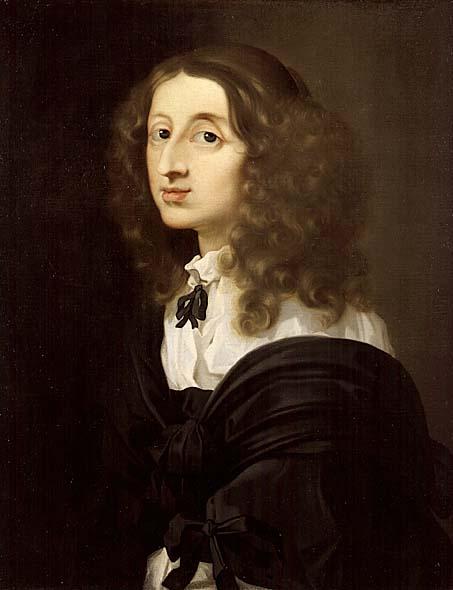
Kristina Wasa

Summary

Kristina of Sweden (1626-1689) is one of history's more quirky individuals. Her life departs from the societal norms of her time, and we are privileged enough to have access to a decent amount of information about her life and work.

Gustavus Adolphus (Gustav II), Kristina's father, died when she was only six years old. She then inherited a nation currently involved in the Thirty Years' War. And in 1648, at the age of twenty-two, Kristina would see the end of the war that claimed her father's life. Her mother, Maria Eleanore, was rumored to have been insane. Her relationship with her mother was strained. Rather than playing with dolls, Kristina wanted to study even from an early age. Due to her position and prominence, Kristina had access to an excellent education. She was trained as a prince, not a princess, as she grew up. And due to her father's early death, Kristina became the queen at an early age. She would study for a total of twelve hours a day, six in the morning and six at night. And, in her own words, she was "engulfed by an immense joy and often came much too early" to her scheduled study time. Eventually, she would invite academics, thinkers, and experts from various parts of Europe to come and visit her court. Matthiae, the Bishop of Strangnas, and Axel Oxenstierna both introduced Kristina to various philosophical works. Matthias is perhaps responsible for introducing unionist doctrines, while Oxenstrierna, who led Sweden while Kristina was still to young, introduced her to things like the art of politics.


Kristina's skeptical doubts and religious views are just a fewo f the many interesting things in her life. She also was tutored by René Descartes visiting her in Sweden. They are known for having corresponded regarding various philosophical subjects through French Ambassador Chanut. Some even blame Descartes' death indirectly on Kristina because she had him wake up at five o'clock in the morning to tutor her when Descartes typically slept until eleven. (Obviously there are more facts involved, including Descartes contraction of pneumonia.)

After having a nervous breakdown, Kristina began to take steps towards abdication. She would eventually convert to Catholicism, though her religious beliefs still remained fairly heterodoxical. Through her position of authority as the Queen of Sweden, she had seen religion used as a political means, and she continued having many doubts, including being troubled by Church dogma. Eventually she conversed with Jesuits in secret and she corresponded with Catholics as well. Kristina was committed to acting in such a way that accurately reflected her worldview, and so she was drawn to discussions about the nature of reality, good and evil, etc.. Kristina was described as being rather masculine. She would wear male clothing, pursue spheres normally reserved for male members of society, and had a deep, masculine voice. By rejecting female culture, Kristina may have viewed herself as primarily male. She never married and often spoke out against the "feminine sex."

The Queen of Sweden lived to be sixty-three, dying in 1689. In her lifetime she wrote, discussed, and studied the theory of the philosopher's stone (or alchemy), skepticism, stoicism, Catholic mysticism, and linguistics.

Personal Response

Overall, I really enjoyed reading about Kristina Wasa. She was an interesting figure who defied any expectations I might have had of her. (I like to think she was kind of quirky, though she was probably far too unorthodox to be considered simply quirky.) Based on this chapter, I gathered whoit was her father that encouraged her education. After his death, the queen then continued her education, since it was in the best interest of Sweden to have an educated leader. This reminded me of the various other women philosophers we've discussed whose education we can trace back to the father. Often the mother is not mentioned or did not support the education of the daughter.

A minor pet peeve I have with the actual chapter is in the discussion of Kristina's philosophical development. Susan Akerman writes, "Matthiae with his strong unionist tendencies is responsible for Kristina's tolerant and critical perspective on religion" (26). When I read this sentence initially, I found it rather off-putting, like Kristina's perspective was not her own. I realize that Akerman may have intended to suggest that she was exposed to such concepts through Matthiae, but I dislike the assertion that they came from him alone. Based on what Kristina did, believed, and explored, I would say that her perspectives on religion went far beyond any "unionist tendencies" she may have been exposed to through the Bishop of Strangnas.

I was struck by Kristina's choice to identify as masculine rather than feminine. Though the chapter does not go into detail about her sexuality, it is hard to ignore Kristina's decision not to get married. Whatever may be assumed about her orientation, she clearly identified masculinity with knowledge and learning. The chapter mentioned several times her educators treated her as a prince, with lessons in "princely" activities. It is almost as if she eventually concluded that to rule, pursue philosophy, or take part in various academic societies, one has to become a man. Though this course, I think, has sought to disprove any such notion, I found it slightly troubling to read in this chapter on Kristina Wasa. I'm not going to try to explain her position away, but it certainly does force me to think about the kind of society she lived in. Given the choice, would philosophy be worth it if it meant I had to reject some other part of myself? I'm not suggesting Kristina did this, but I think it is within the realm of possibility.

Source

Chapter 2 "Kristina Wasa, Queen of Sweden" by Susanna Akerman in A History of Women Philosophers: Modern Women Philosophers, 1600-1900 by Mary Ellen Waithe